Confirming role requirements and setting the hiring bar
Colare exists to measure real engineering ability, not resume keywords. That only works if the assessment is built on an accurate picture of the job, and your team is the only one who has it. The proposal is how you give it to us: we draft, your engineers correct, one sign-off starts the build.
1What a proposal is
A proposal is a quick form that captures our first read of your JD: what the role is composed of, and the minimum bar a hire needs to clear. Your team edits both directly so the document matches the real job. Once the team has made its pass and signed off, our talent science team analyzes the results and builds the assessment out for you.
Section 1. What we think this role does
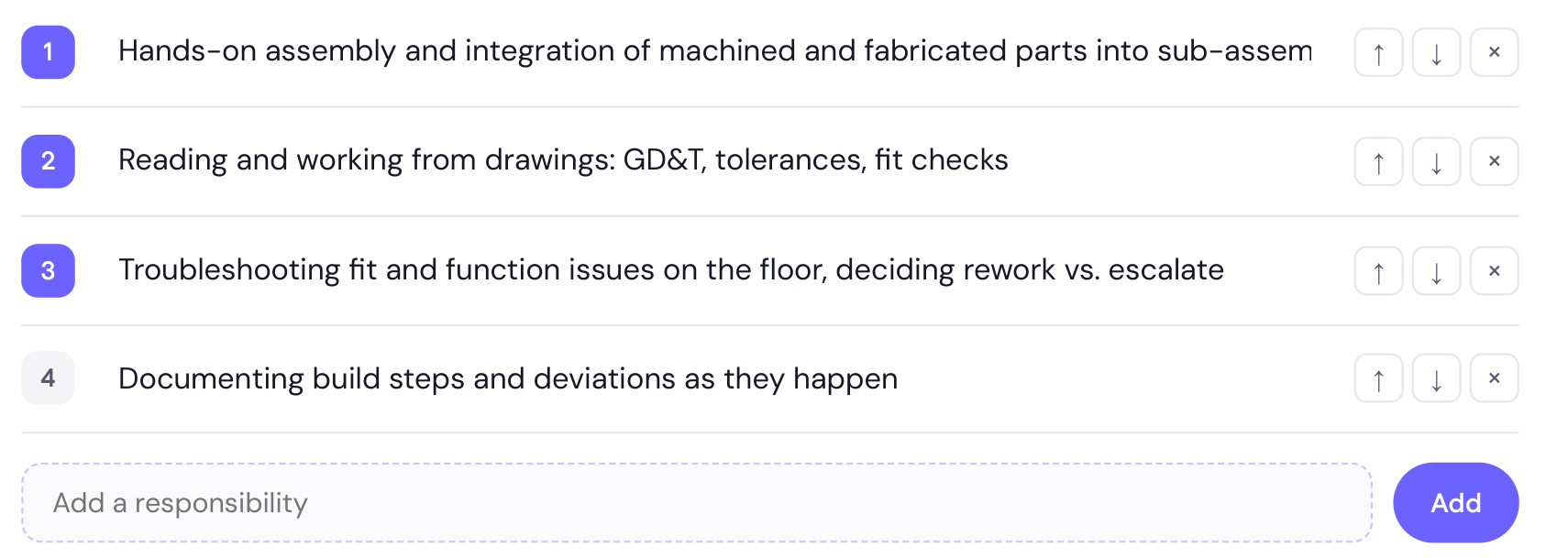
The assessment needs to emulate the real work happening on the job. This section lists the responsibilities we pulled from the JD, ranked by how central we believe each is to the role. You can re-rank, remove, and add.
Section 2. The minimum viable engineer
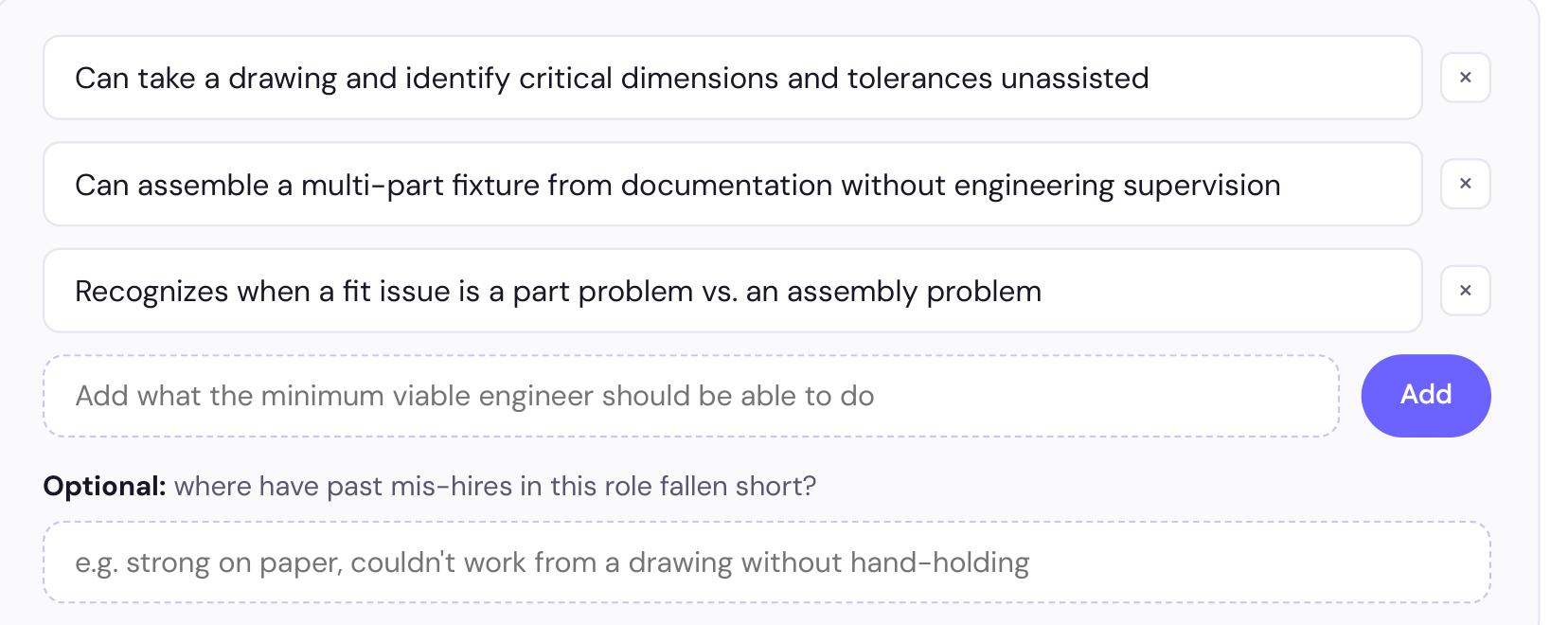
The skills the weakest candidate you would still be comfortable hiring must have. This list becomes the competence floor: the line that decides which candidates pass through and which stop here. That is why honest beats aspirational, a floor is not a wishlist.
2How the review works
Five steps from JD to live assessment.
We draft the proposal from your JD
Colare's talent science team drafts the proposal and sends your talent team a link to the editable version, pre-filled with our read of the responsibilities and the minimum bar.
Sends the link to the relevant engineers
The talent team owns this step: pick the engineer or engineers closest to the role and send them the link. Ready-to-send intro copy is provided with the proposal.
The proposal circulates among your engineers
Anyone with the link can re-rank, edit, and add directly in the document. Changes save as they go, so whoever opens it next always sees the most updated version. No formal pass needed from every person, just from the people who know the work.
10 to 15 min per engineer
One engineer signs off
Once the review is done, one engineer types their name and confirms.
We build from the confirmed version
The assessment goes live to candidates within 7 days of sign-off.
3What a good review looks like
For the engineers doing the reviewing. Three habits separate a review that sharpens the assessment from one that rubber-stamps the JD.
Rank the daily work first
If the JD leads with a skill that comes up twice a year, demote it. The top three ranks decide where question depth goes, so they should be the three things the hire will do most.
Set the bar you would actually hold
The minimum viable engineer is the weakest hire you would still make. If a listed skill is trainable in week one, it does not belong on the floor.
Use the mis-hire prompt
Where past hires fell short is the single most predictive input you can give us. "Strong on paper, could not work from a drawing" tells us exactly what to test hardest.
4After sign-off
- We build the assessment from the confirmed version of this document.
- It is live to candidates within 7 days.
- Your top-3 ranking and minimum bar set the starting cut score for the role.
- Optional: 1 to 3 of your engineers take the assessment to benchmark the bar against people already doing the job.